Free To Be
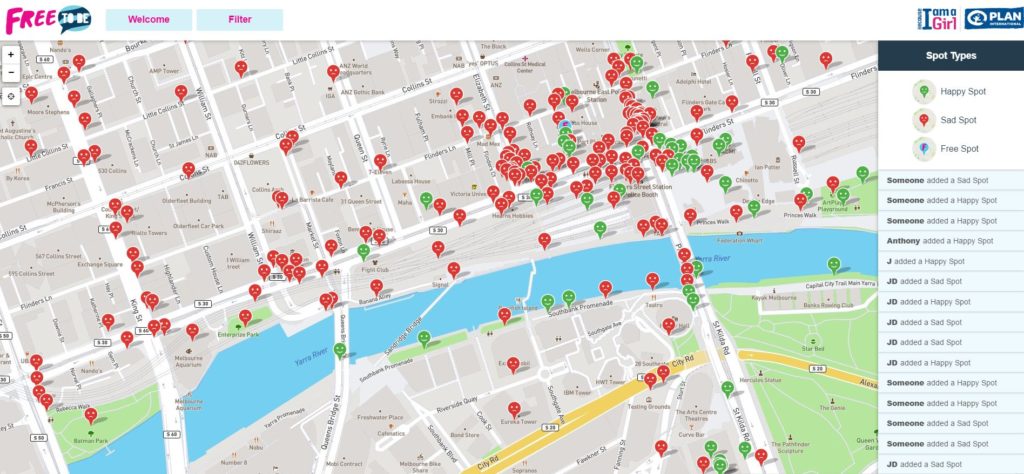
For many women, catcalling and street harassment are an ugly part of daily life.
Often these incidences also go unreported in Australia, leaving policy makers and the public in the dark about the pervasiveness of public harassment.
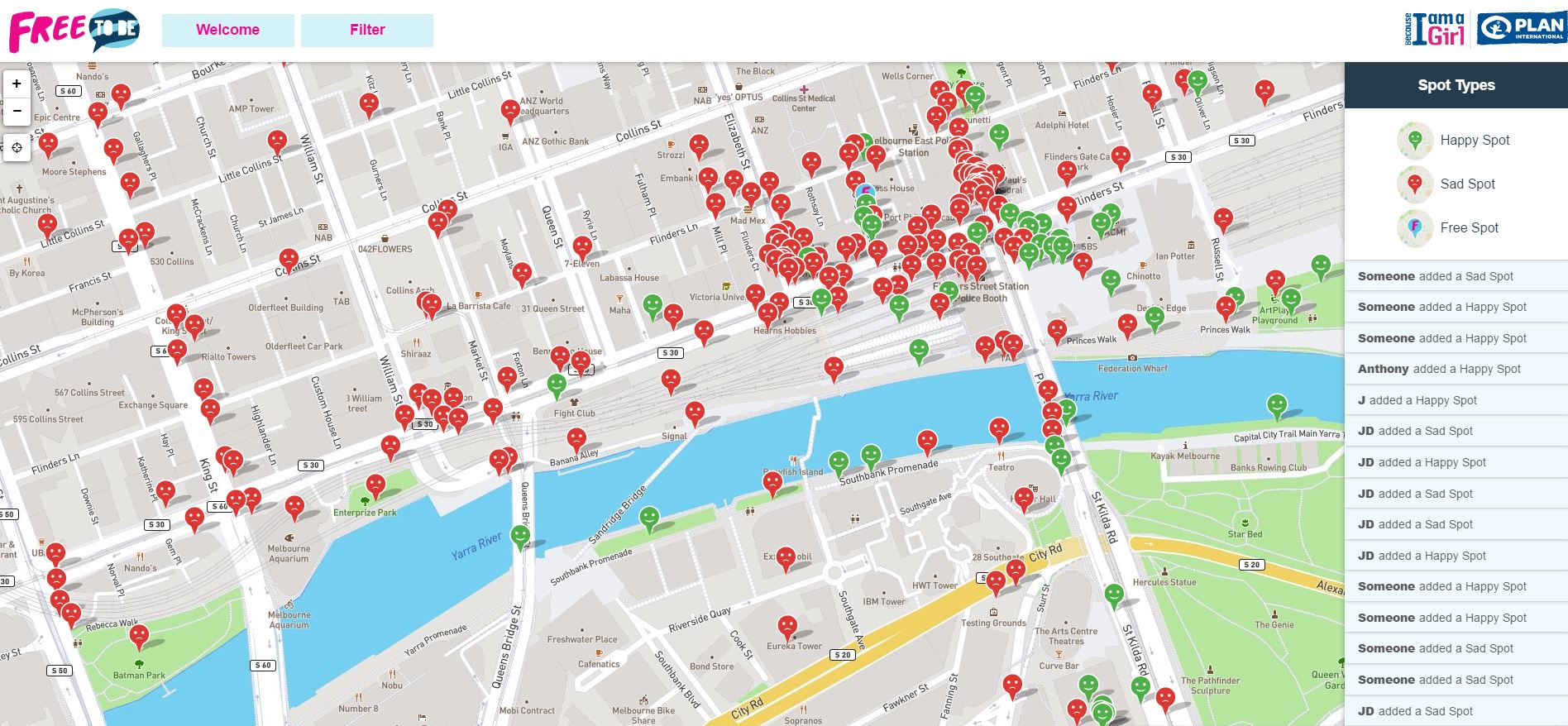
Free To Be is an online tool made to counter this. Created by children’s charity Plan International and mapping company Crowdspot, it’s designed for women to report where they have felt unsafe, as well as locations where they comfortable.
The development of the tool follows a survey by Plan International, polling women between the ages of 15 to 19, which saw a third of young women report they felt unsafe going out at night.
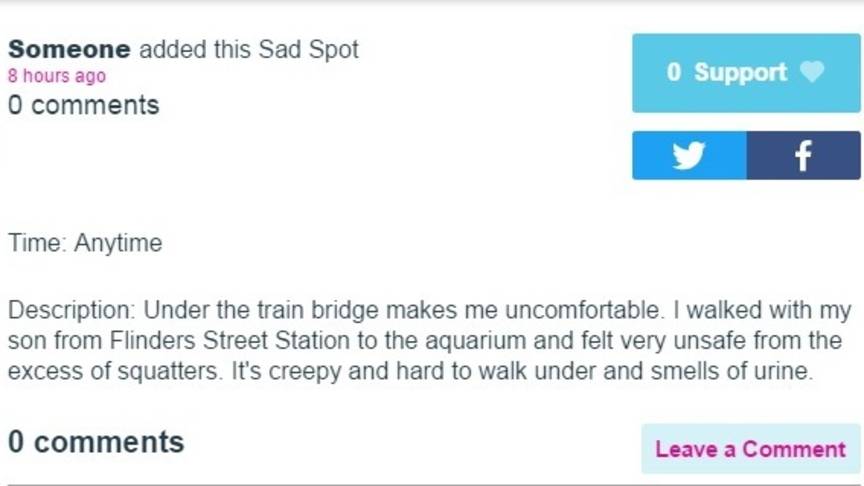
“We live in Australia, and we should all have the right to feel like we can access public space. It’s not good enough that young women aren’t feeling like they can,” Zoe Condliffe, Plan International Australia’s Campaigns Officer, told Mashable.
As a case in point, the Free To Be website carries profiles of three young women who have experienced street harassment.
One of these is 16-year-old Carly, who was grabbed by a man as he walked past her.
“What was interesting about it is that it’s an extremely common story. I think a lot of women would relate to that, but what it did, is it changed the way she used the city,” Condliffe said.
“So she stopped going out, she started being more conscious of what she was wearing when she went out. She started putting on hostile expressions, so that people wouldn’t look at her.
“I think that’s really worrying, because she’s only 16 and has already had to change how she uses public space.”
“It’s a day-to-day thing you become aware of. That you’re being stared at, that you’re being catcalled. It honestly happens every single week … but we’ve got to stop accepting as normal.”
Currently the online mapping tool is only available in Melbourne, Australia, but since its launch in October, the map has already over 800 geographical points submitted.
The data will be shared with the City of Melbourne, who Plan International have worked closely with to find out what information it needs about street harassment.
Ideally the tool will be expanded across Australia and internationally, including being made into a mobile app.
The charity is also in conversations with local police and public transport providers who want access to the data, as well as other municipalities keen to have it in their local region.
“I think what it says is this is something that hasn’t been done, but that people are hungry for,” Condliffe said.
“Women are hungry to tell their stories and feel like they’re actually being listened to. And the great thing about it is that decision makers appear to be engaging and listening.”
“We think people need to take the experiences of women more seriously, otherwise we can’t make change in the area of everyday sexism.”
Questions about this article
What is Free To Be?
Free To Be is an online map on which women can mark places in Melbourne where they felt unsafe or harassed, and places where they felt comfortable. It was created by Plan International and Crowdspot.
Why was Free To Be created?
Street harassment often goes unreported in Australia, leaving policy makers and the public unaware of how common it is. A Plan International survey found that a third of young women aged 15 to 19 felt unsafe going out at night.
Who uses the data from Free To Be?
The data will be shared with the City of Melbourne. According to the article, local police, public transport providers and other municipalities also want access to it.
Questions and answers added in 2026, based on the article above.