App: RealRider
Every once in a while, an idea comes along that’s so smart yet so simple that it’s hard to believe it’s not been done already. The best of these are often not new technologies, just a new way of using things we have already.
Whoever invented the helmet probably thought the same thing the first time a sword was swung at their head. More recently, the British neurosurgeon Sir Hugh Cairns was so moved by the death of his patient TE Lawrence, following a motorbike accident in 1935, that his subsequent research is credited with making that wartime headgear a legal requirement for motorcycling, saving untold lives over the years.
Motorcyclists are at least three times more likely to be in a fatal accident than anyone else on the road, according to the Department of Transport, so if there’s something you can do to improve your odds of survival, why not do it?
The first thing to look at is your riding. If you’ve been doing it for any length of time, you’ve probably picked up bad habits you’re not even aware of. The problem is that when we do something a bit risky and get away with it, we’ll do it again. Over time, this sneaks up on us in tiny increments until our perception of risk is so corrupted that we think we’re safe doing things like filtering through stationary traffic at 30mph.
Yet even when your head’s in the right place to ride, being aware of danger is little help when you can’t get out the way in time. So bike maintenance is another layer in your defences. A quick glance over each week will give you an idea of what’s likely to need fixing.
Once you’re alert and your bike is ready to ride, you can make yourself easier to spot by wearing high-visibility gear, putting brighter bulbs in your headlights or sticking a louder exhaust on your ride, but they still rely on someone else being more careful with your life than you are.
After that, all that’s left is your gear to keep you alive. Thanks to Cairns you’ll be wearing at least a lid. You might even have a jacket and gloves, if you value your skin. But it makes sense to get all the armour you can afford and bear to wear. There are several types of rider airbags available from waistcoats, such as the Spidi DPS Neck and Dainese D-air Street, for several hundred quid, to jackets and one-piece racing suits, such as Alpinestar’s Techair, which costs around £5,400.
Hopefully these precautions will keep you riding for as long as you want to, but if you do get into a serious scrape the speed help reaches you is critical to your chances. What if you’re alone, on a quiet street late at night, or blasting down a country lane and no one’s there to notice? One last piece of kit you’ll probably have with you is a phone, in case of breakdowns. Now it could end up saving your life, even if you’re too injured to use it.
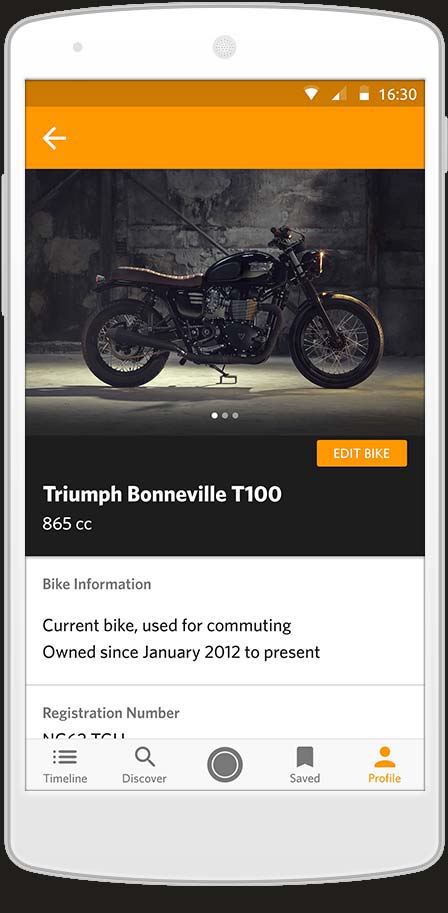
The RealRider (iOS, Android) social network has developed an app that uses a smartphone’s tilt and rotation sensors to tell if you’d had an accident. It then sends an alert to your phone, and if you don’t or can’t cancel it, it contacts the emergency services, who will dispatch an ambulance to your location using the phone’s GPS co-ordinates. Just like Cairn’s work, the real genius is in taking something we already have and putting it to a new use, making it safer to enjoy two wheels without robbing it of any excitement or costing a fortune.
It won’t save you from your own or others’ stupidity, it won’t stop you getting hurt, but if you do get into an accident where you can’t pick yourself up again, it could be what ultimately lets you live to ride another day.
Ride Safe Ride with complete peace of mind when you activate REALsafe, REALRIDER’s 999 integrated, life saving crash detection technology that connects you automatically and directly to the nearest ambulance service in the event of a crash. Ride connected Record and share your routes, photos, videos and adventures with a community of bikers all over the world. Ride inspired Discover new routes to ride and uncover hidden gems along the way. Ride prepared Store all your bike information in one place and get MOT and service reminders straight from your phone’s calendar.
Sources: RealRider, Independent
Questions about this article
How does RealRider detect a crash?
It uses the smartphone’s tilt and rotation sensors. After a suspected accident it sends an alert to the phone; if the rider does not or cannot cancel it, the emergency services are contacted and an ambulance is sent to the phone’s GPS coordinates.
What else does the RealRider app offer?
Riders can record and share routes, photos and videos with other bikers, discover new routes, and store bike information with MOT and service reminders.
What other safety measures does the article mention for motorcyclists?
Checking your own riding habits, weekly bike maintenance, high-visibility gear and brighter lights, helmets and other protective gear, including rider airbags in waistcoats, jackets and racing suits.
Questions and answers added in 2026, based on the article above.